
A room block looks simple: the hotel holds a set of rooms at a group rate, and your guests book into them. The part that trips people up is what happens when guests don't fill those rooms. Depending on the contract, that gap can turn into a charge, and in some contracts the couple is the one who owes it.
This guide is for wedding planners and for couples handling their own booking. If you're a couple reading this, you're welcome to use it on your own, and if you'd like a second set of eyes on a contract before you sign, reach out. Contracts vary a lot, so treat everything below as a list of questions to ask, not a standard to expect. This isn't legal advice.
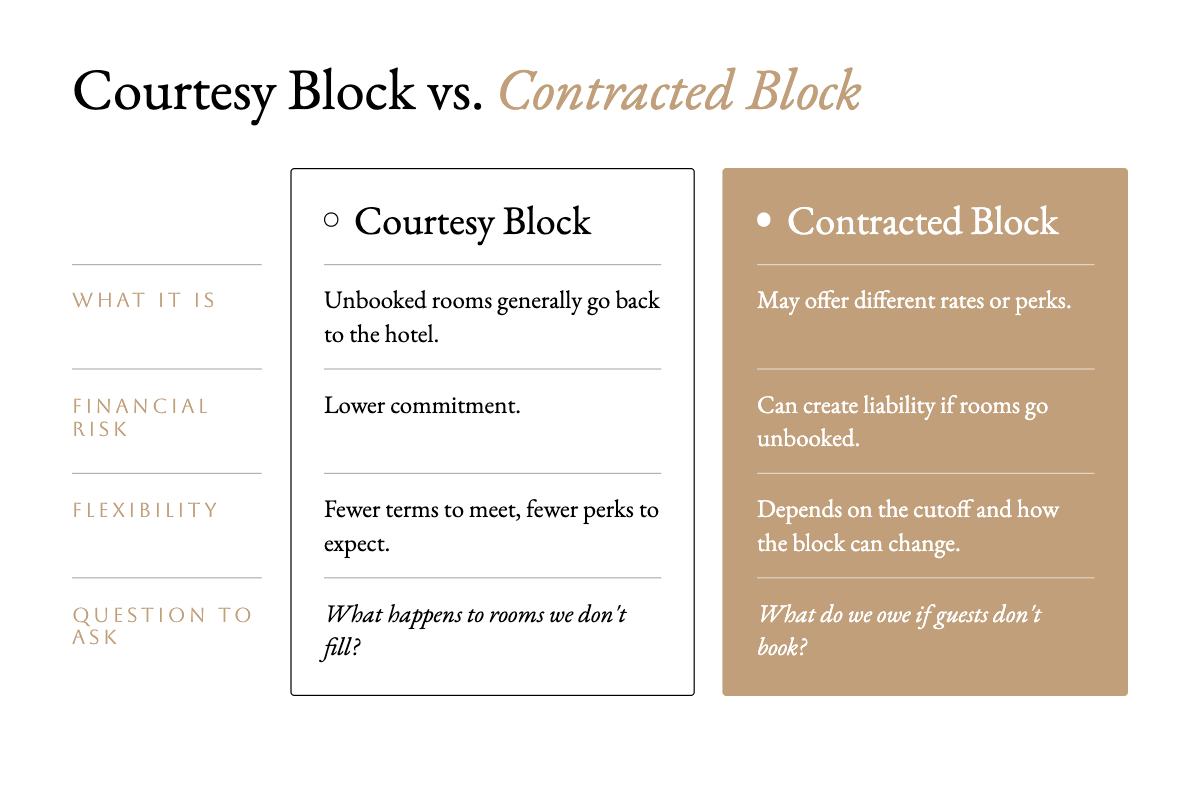
Before negotiating, confirm what kind of block you're being offered. A courtesy block generally lets unbooked rooms go back to the hotel without making you pay for them; a contracted block may offer different rates or perks but can create financial liability. Ask what the agreement actually requires, including the cutoff date and whether you can add rooms later. [1]
1. How is attrition calculated?
Attrition is the minimum share of the contracted rooms or room nights you agree to fill before a shortfall charge may apply. The sources describe different ranges: Joy gives 75% to 90%, Event Garde describes 80% to 90% as common in event contracts, and BeachBride recommends negotiating toward 70% or lower. Treat these as attributed guidance—not a universal standard—and check the contract. Ask whether the threshold is calculated night by night, cumulatively across the stay, or against room revenue; what counts as a credited booking; and whether taxes, resort fees, or other amounts are included in any charge. [2] [3] [4]
For example, a 30-room block with an 80% minimum requires 24 rooms. If only 20 are credited, the shortfall is 4 rooms; at $200 per room, that is $800 before taxes or other contract charges. A multi-night block can calculate differently depending on whether the hotel measures each night or total room nights. [2] [3]
2. Is there a resale or credit clause?
Don't assume the hotel will resell unused rooms or credit those sales unless the contract says so. Ask whether the hotel must make an effort to resell released rooms, whether resold rooms reduce your shortfall, and how the hotel will document that calculation. [4] [2]
3. When is the cutoff, and what gets released first?
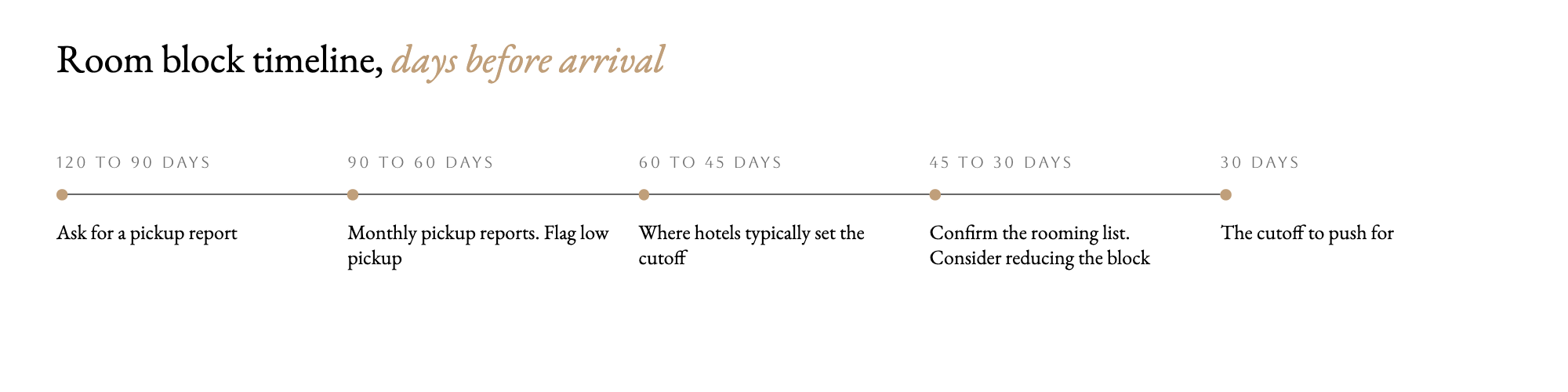
The cutoff is the date the hotel can take back unbooked rooms; the exact timing and consequences depend on the contract. Ask for a review date before the cutoff so you can release rooms early, and whether the block can be reduced in stages as bookings become clearer. Confirm in writing how a reduction affects the remaining commitment—some contracts may change the liability when the block is adjusted. Also ask whether guests can book extra nights at the group rate and whether room types or inventory change at cutoff. [2] [3] [1]
4. Do bookings made outside the block count?
Guests may book through a third-party site, call the hotel directly, or choose another rate. Ask whether eligible outside bookings can count toward your pickup, how the hotel will match reservations to the wedding, and whether it will provide regular booking reports and a final housing audit. Share the booking link early and remind guests why booking in the block matters. Compare the group rate with public rates for the same dates, room type, and cancellation terms, including taxes, resort fees, deposits, and minimum-night rules; ask whether the group rate can be matched if a public offer becomes lower. [3] [4] [5] [1]
5. Who is liable, and what protections are in place?
Check who is liable and the maximum amount you could owe. Ask whether a deposit or card hold applies to your guests' rooms, what a shortfall charge includes, and how attrition differs from canceling the entire block or event. Review cancellation and force majeure terms, and consider asking about protections if the hotel relocates guests or materially changes the property. Start with a block you can support with realistic demand, and confirm whether you can add rooms later. Put every rate, perk, and promise in the written agreement; don't rely on a verbal assurance. [2] [5] [6]
A note for guests and for planners alike: a group rate can be worth it, but only when the terms fit how your guests actually travel. Shorter-stay guests, mixed budgets, and flights that arrive on different days all affect how well a block fills.
My practical takeaway
Start with how your guests are likely to travel—where they'll stay, what they can comfortably pay, and how long they'll be there. Then compare the full value of the block with other options before taking on a commitment. If the numbers or terms aren't clear, pause and get them clarified; seek qualified legal advice for contract interpretation.
Planning a wedding with out-of-town guests, or helping a couple who is? I can help you think through guest-travel needs, compare accommodation options, and identify questions to take back to the hotel. For legal interpretation of contract terms, consult a qualified attorney. Get in touch.
Sources
Rachel Leigh Events, "Navigating the Confusing World of Wedding Room Blocks" (May 8, 2022): https://rachelleighevents.com/navigating-the-confusing-world-of-wedding-room-blocks/
Joy, "What's an Attrition Clause in a Hotel Block?" (undated): https://withjoy.com/glossary/what-is-attrition-clause/
Event Garde, "Understanding Room Block Attrition: What It Means, How It’s Calculated & How to Manage It Effectively" (November 15, 2024): https://eventgarde.com/blog/understanding-room-block-attrition-what-it-means-how-its-calculated-how-to-manage-it-effectively
BeachBride, "How to Negotiate a Hotel Room Block for Your Destination Wedding" (April 14, 2026): https://beachbride.com/destination-wedding-room-block-guide/
Amy Abbott Events, "The Pro's & Con's of A Destination Wedding Room Block" (July 31, 2024): https://amyabbottevents.com/wedding-room-block/
Endless Events, "How to Negotiate Hotel Blocks" (August 30, 2018): https://helloendless.com/how-to-negotiate-hotel-blocks/
Travel by Linyanti is an independent affiliate of Fora Travel, specializing in corporate retreats, wedding group travel, and retreat gatherings — with direct relationships at hotels worldwide that a booking site simply can't offer.