Navan, TravelPerk, or a Travel Advisor? What Actually Fits Your Trip

If you're evaluating a corporate travel platform — Navan, TravelPerk, SAP Concur, Ramp — you're solving a real problem: employees booking travel inconsistently, expense reports piling up, no visibility into spend. These platforms are good at that problem. This isn't an argument against using one. It's a look at what they're actually built for, and where that stops being enough.
What these platforms do well
Self-serve booking within policy, automated expense reconciliation, corporate card integration, real-time spend visibility. For recurring individual business travel, a sales rep flying out twice a month, a consultant on a rotating client schedule — this is genuinely the right tool.
Navan's free tier for companies under 200 employees, with no cap on trips booked under 300, is a strong offer if that's the problem you're solving. If your team travels often and your main pain point is fragmented booking and messy expense reports, a platform is probably the right call.
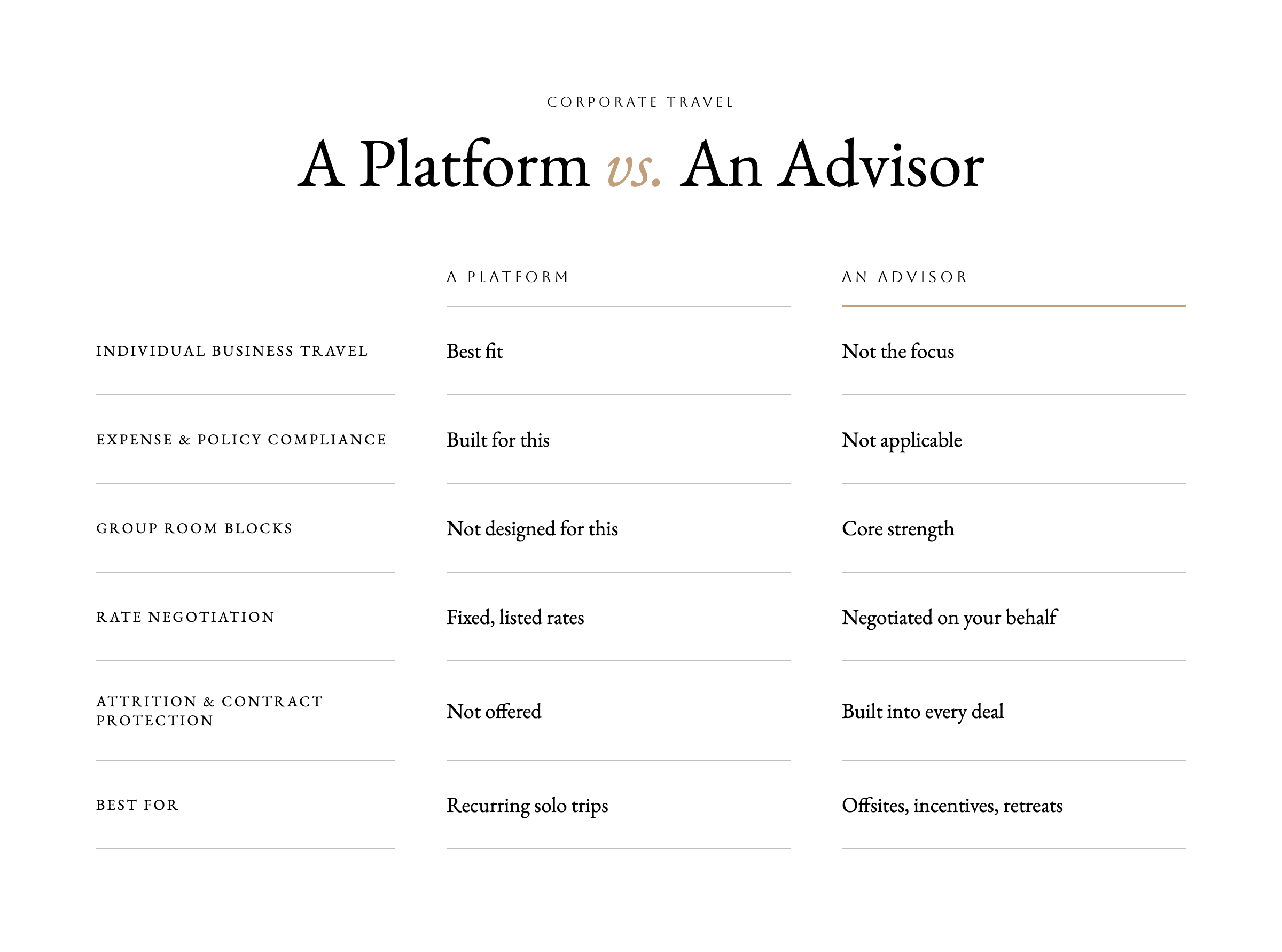
Where the model runs out of road
These platforms are built to match individual travelers to individual bookings against a policy. That's the whole model. One person, one trip, one set of rules.
It's not the model for a 40-room block, a group rate negotiated against total contracted value, or an attrition clause that protects you if ten people drop out three weeks before a retreat. Even Navan's newer events product, which now bundles venue sourcing into the platform, is still software matching inventory to criteria. It's not a person with a standing relationship at the property, negotiating on your behalf.
The actual tradeoff
This isn't "software bad, human good."
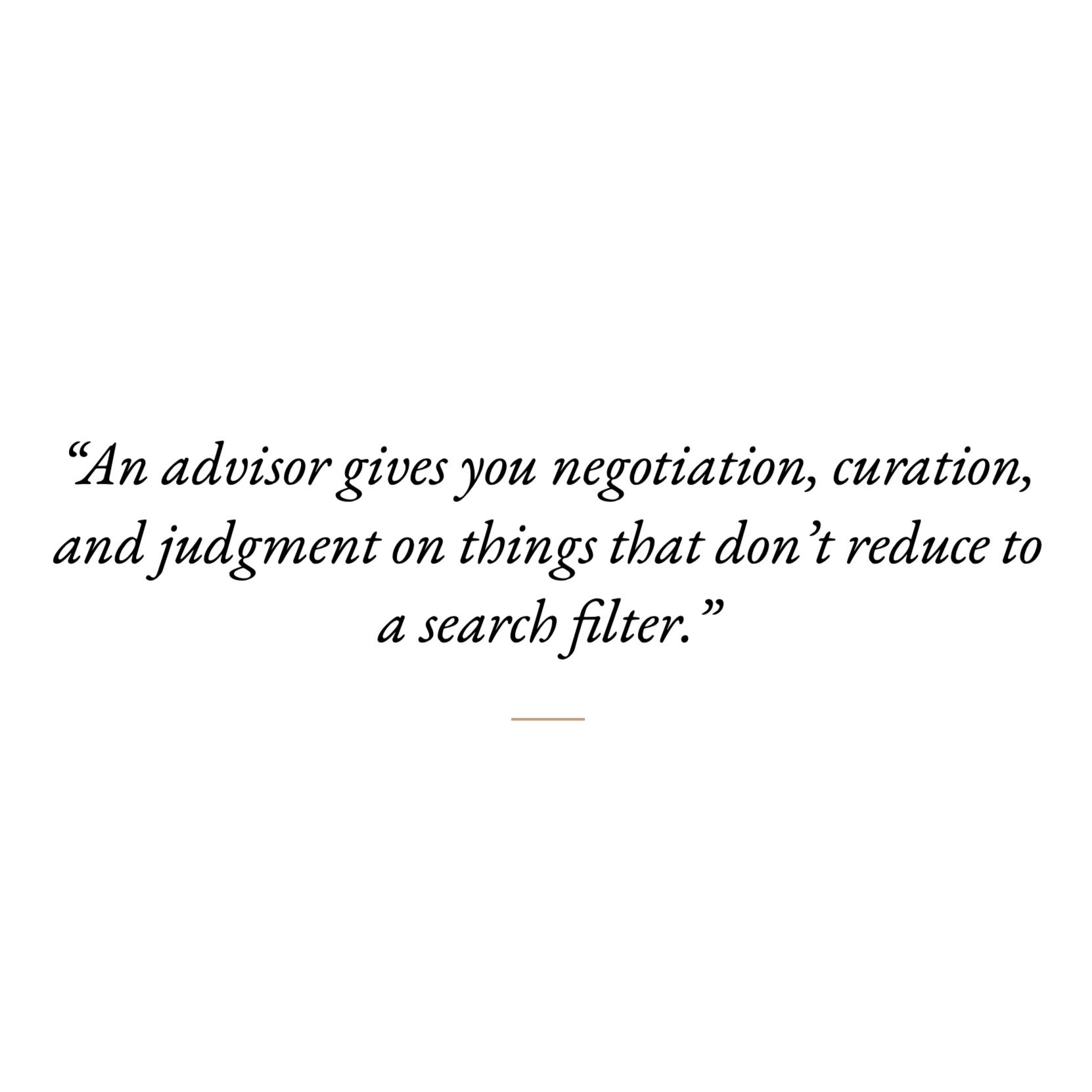
It's two different tools solving two different problems. A platform gives you policy enforcement and expense automation at scale. An advisor gives you negotiation, curation, and judgment on things that don't reduce to a search filter like whether a property can actually handle your group's needs, what leverage you have to ask for concessions, or how to structure a contract that protects you if the numbers shift.
Where each one wins
A platform is the right call for recurring individual travel, expense compliance across a large team, and high booking volume where consistency matters more than customization.
An advisor is the right call for group travel like offsites, incentive trips, and conferences, where the value comes from negotiation and relationships a booking engine doesn't have access to.
If it's the second one
If what you're actually planning is a retreat, an incentive trip, or a leadership offsite, and not routine individual travel — see how we handle corporate group travel.

Travel by Linyanti is an independent affiliate of Fora Travel, specializing in corporate retreats, wedding group travel, and retreat gatherings — with direct relationships at hotels worldwide that a booking site simply can't offer.